# History of Nepal
Nepal is a country with a remarkably rich history shaped by ancient civilizations, powerful kingdoms, cultural traditions, and significant political transformations. From the early settlements of the Kathmandu Valley to the modern federal republic, the country has experienced centuries of change while preserving its unique cultural identity.
## Ancient Nepal
The early history of the Kathmandu Valley is associated with the Gopala and Mahishapala dynasties, who are traditionally regarded as some of the earliest rulers of the valley. Their center of power is believed to have been located around Matatirtha. Later, the Kirantas established their rule in the valley and remained influential for several centuries. King Yalambar, traditionally associated with the Kiranta period, is also mentioned in the ancient epic *Mahabharata*.
Around the beginning of the first millennium, the Licchavi period brought major developments to the Kathmandu Valley. The Licchavis contributed significantly to Nepal's art, architecture, trade, religion, and administration. Many historic monuments and inscriptions from this period demonstrate the cultural achievements of the era. The famous Changu Narayan Temple near Bhaktapur is among the important heritage sites associated with Nepal's early history.
Relations between Nepal and Tibet also developed during this period. The marriage alliance involving Princess Bhrikuti and the Tibetan ruler Songtsen Gampo is traditionally regarded as an important connection between the two regions and their cultural traditions.
## The Malla Era
The Malla period became one of the most influential chapters in the cultural history of the Kathmandu Valley. Beginning around the medieval period, Malla rulers promoted architecture, literature, music, art, festivals, and religious traditions.
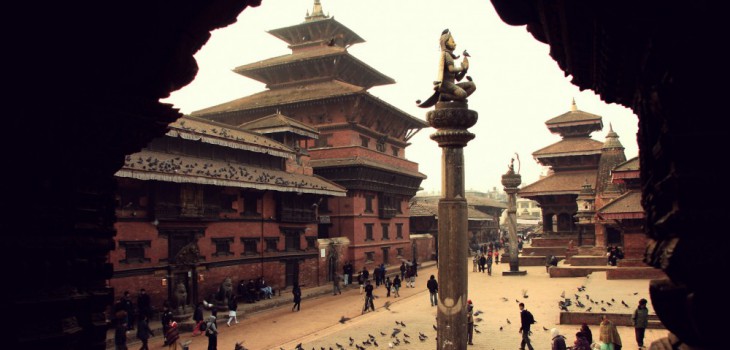
During their long rule, impressive temples, courtyards, palaces, and public squares were constructed throughout Kathmandu, Bhaktapur, and Patan. Intricate woodcarving, stone sculpture, metal craftsmanship, and traditional architecture flourished during this period.
Following the death of King Yaksha Malla, the Kathmandu Valley was divided into three major kingdoms: **Kantipur (Kathmandu), Bhadgaon (Bhaktapur), and Lalitpur (Patan)**. This political division contributed to intense cultural and architectural development, with each kingdom seeking to demonstrate its artistic and religious achievements.
## Unification of Nepal
Before modern Nepal was unified, the region consisted of numerous independent kingdoms and principalities. Among them was the Gorkha Kingdom, which gradually became a major political power.
King **Prithvi Narayan Shah** of Gorkha began an ambitious campaign to bring the fragmented kingdoms together. After years of military campaigns and strategic alliances, his forces conquered the Kathmandu Valley in the 18th century.
In **1769**, Prithvi Narayan Shah established Kathmandu as his capital and laid the foundation for a unified Nepal. His efforts created the political framework of the country that eventually developed into modern Nepal.
Recognizing the growing influence of European powers in the Indian subcontinent, the new kingdom adopted a cautious approach toward foreign influence. Nepal remained relatively isolated from the outside world for a considerable period.
## The Rana Period
In the 19th century, **Jung Bahadur Rana** emerged as the most powerful political figure in Nepal and established the Rana system of hereditary prime ministers. For more than a century, Rana prime ministers exercised dominant political authority, while the Shah monarchs remained largely ceremonial figures.
The Rana period ended following a political movement for democratic reform in the early 1950s. With support from King Tribhuvan and democratic forces, the Rana regime was brought to an end, opening a new chapter in Nepal's political history.
## The Beginning of Democracy
Nepal experienced several political changes during the second half of the 20th century. A new constitution was introduced, and parliamentary elections were held in 1959. The Nepali Congress emerged victorious, and **Bishweshwar Prasad Koirala (B.P. Koirala)** became Nepal's first elected Prime Minister.
However, the democratic system was short-lived. King Mahendra dissolved Parliament in 1960 and introduced the **Panchayat system**, under which political parties were restricted and the country was governed through a partyless political structure.
The Panchayat system continued for several decades before a nationwide people's movement in **1990** led to the restoration of multiparty democracy. Constitutional reforms established a parliamentary system in which the monarch served as head of state and an elected prime minister led the government.
## Nepal's Journey to a Republic
Nepal entered another major period of political transformation in the 1990s. In **1996**, the Maoist insurgency began, creating a decade-long conflict that deeply affected the country.
A tragic turning point came in **2001**, when King Birendra and several members of the royal family died in the royal palace massacre. Prince Gyanendra subsequently became king.
Political tensions continued to grow, eventually leading to the **People's Movement of 2006**. Widespread protests and political pressure resulted in the restoration of Parliament and the beginning of a peace process.
Later in 2006, the government and Maoist leadership signed the **Comprehensive Peace Agreement**, formally bringing the armed conflict toward an end and establishing a framework for Nepal's transition to a peaceful democratic system.
## Modern Nepal
A major milestone was reached in **2008**, when elections for the Constituent Assembly were held. On **28 May 2008**, the Constituent Assembly formally abolished the monarchy and declared Nepal a **Federal Democratic Republic**.
Today, Nepal is a federal democratic republic governed under its constitution. The country is home to diverse ethnic communities, languages, religions, traditions, and cultural practices.
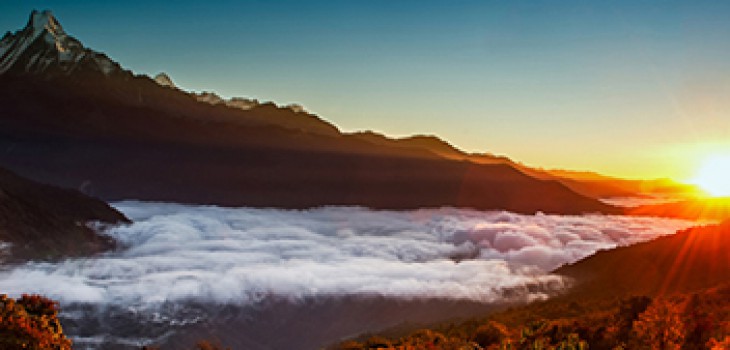
From ancient temples and historic cities to the world's highest mountain, Nepal's history is deeply connected with its landscapes, people, culture, and traditions. This remarkable combination of history and natural beauty makes Nepal a fascinating destination for travelers from around the world.